
Colorado National Monument
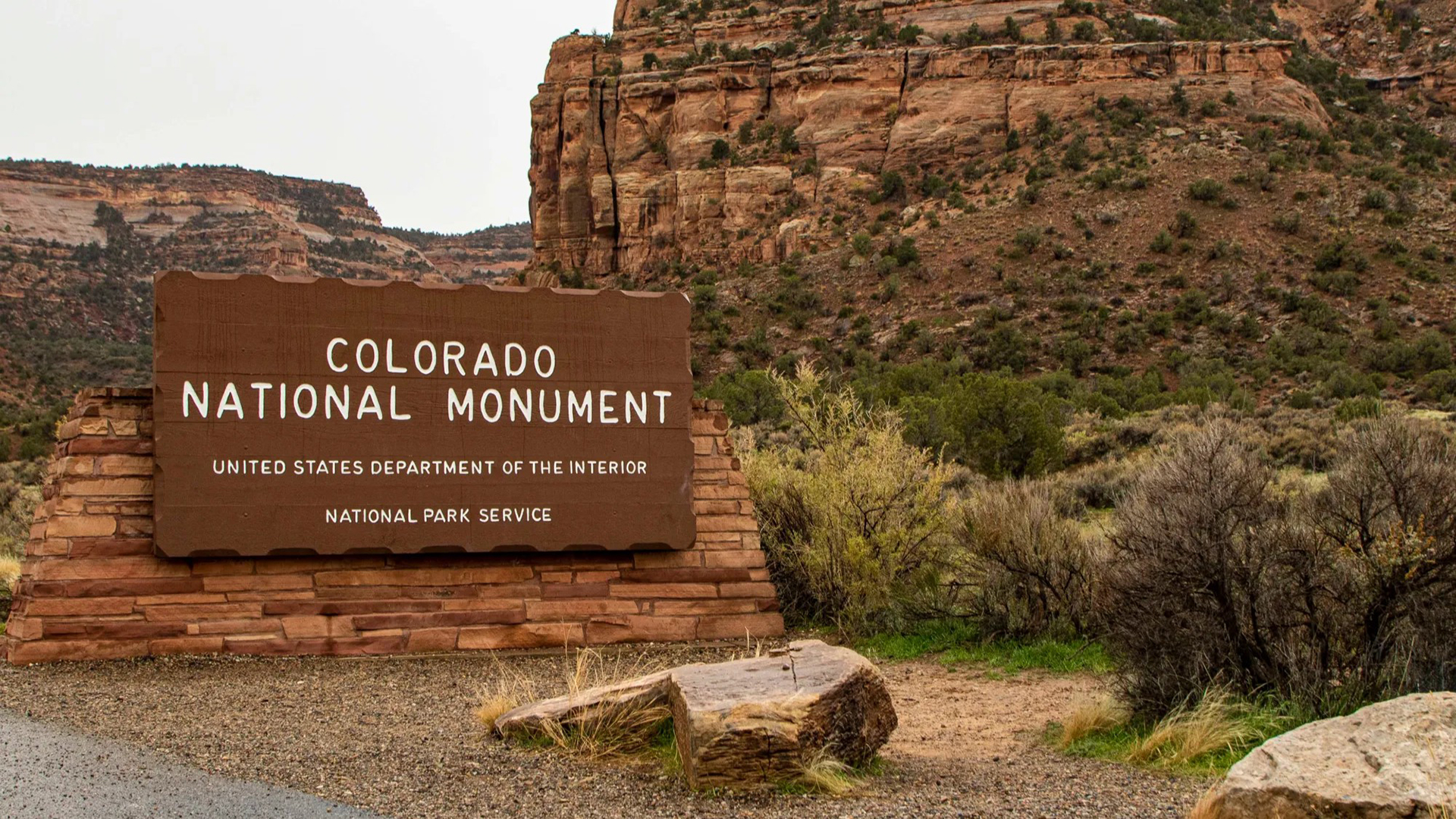
Colorado National Monument is a 20,533-acre park of red sandstone canyons and sheer monoliths rising above the Grand Valley near Fruita, Colorado.
Colorado National Monument in Fruita, CO
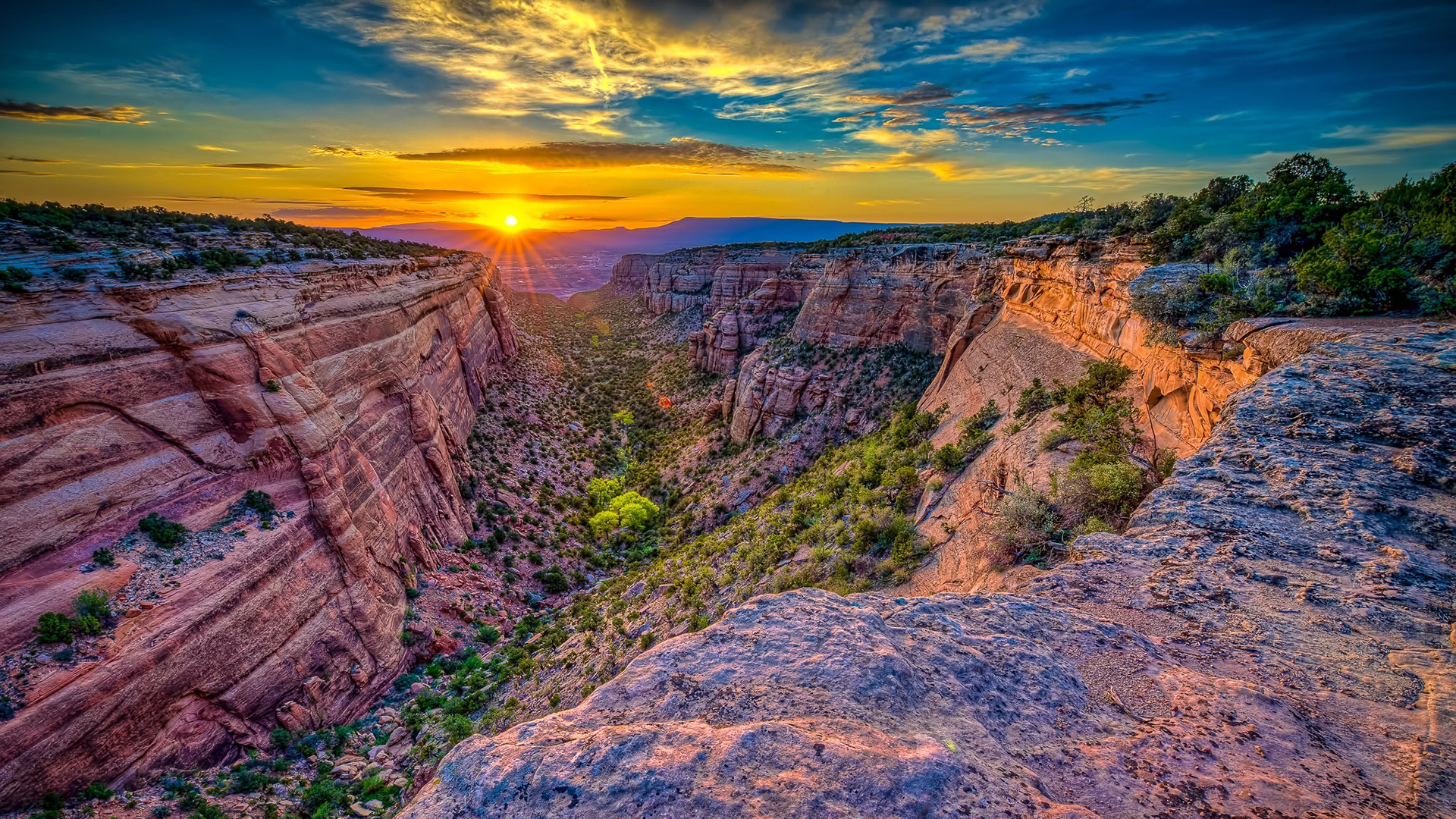
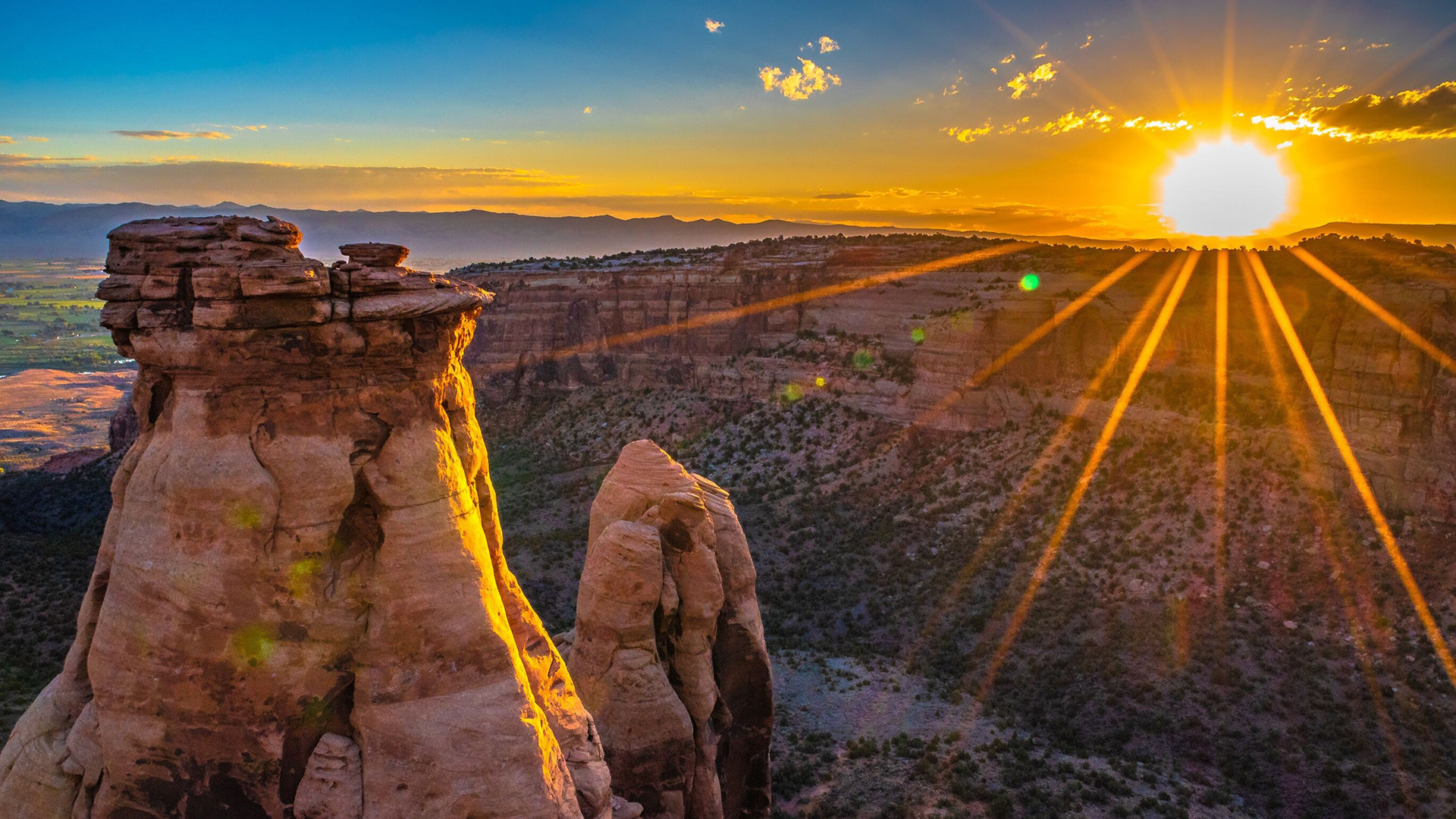
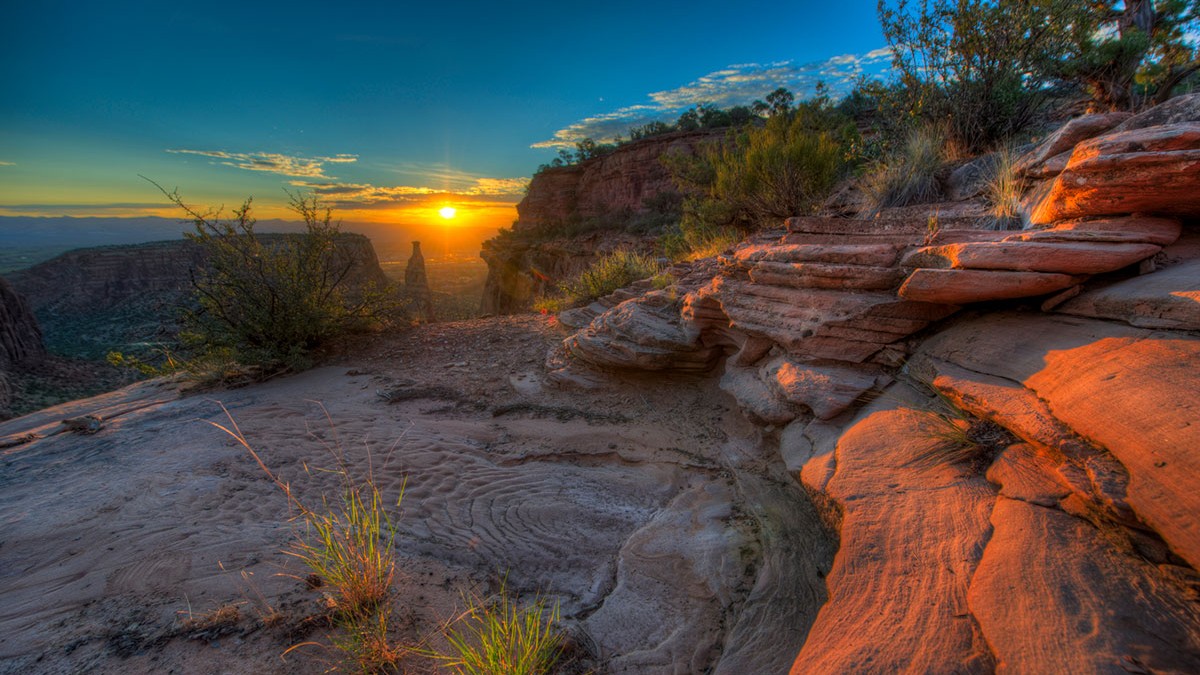
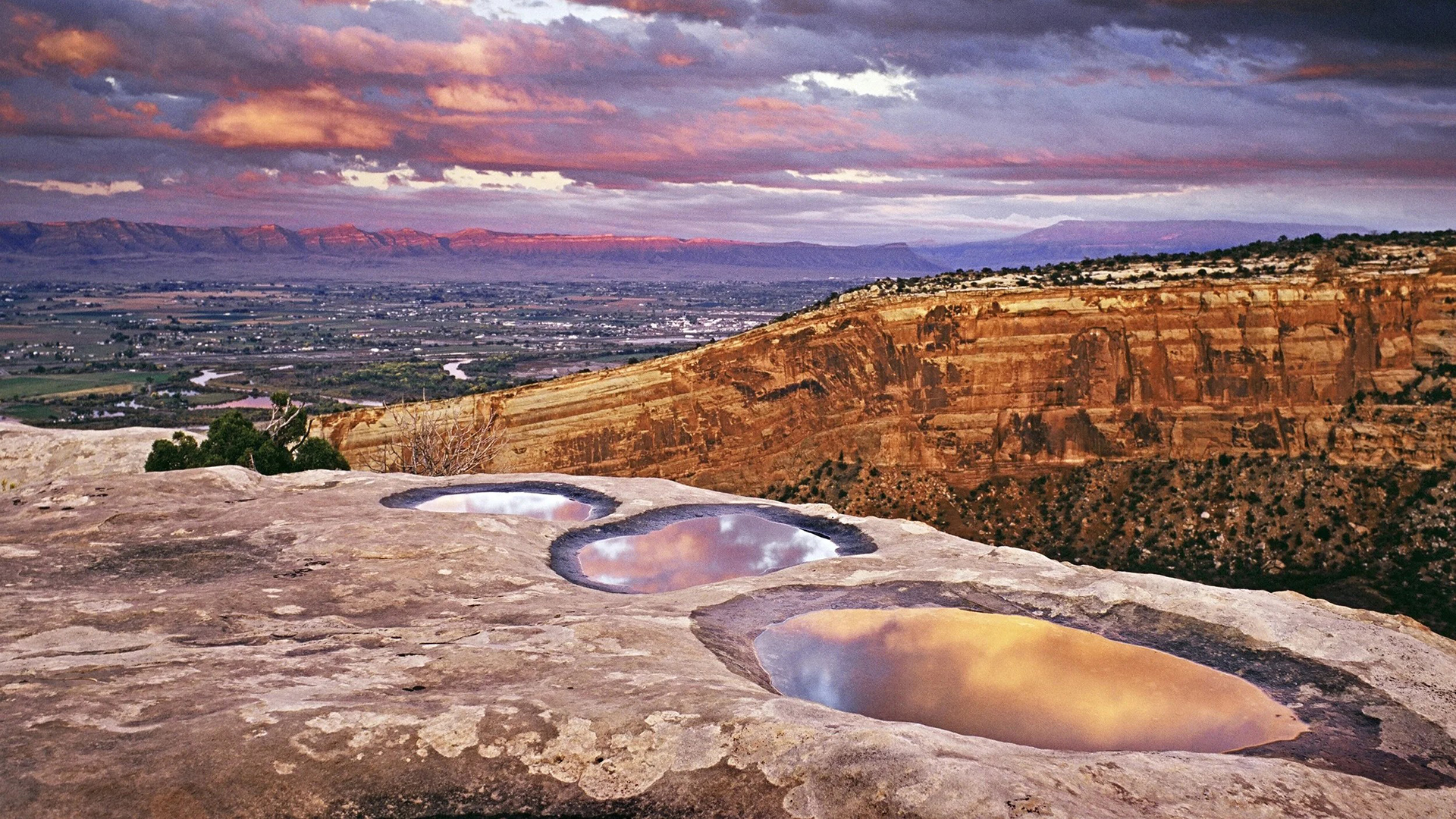
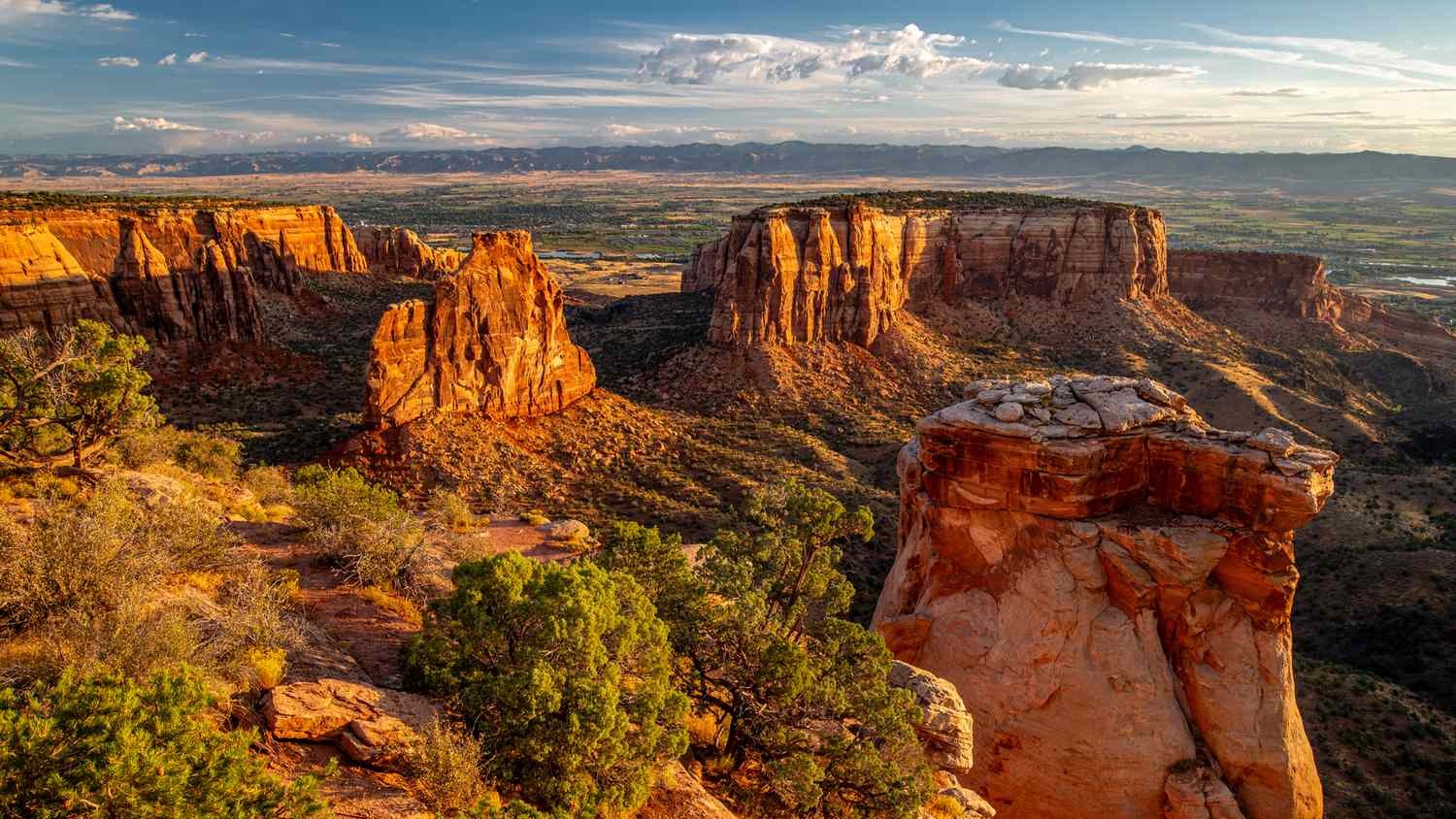
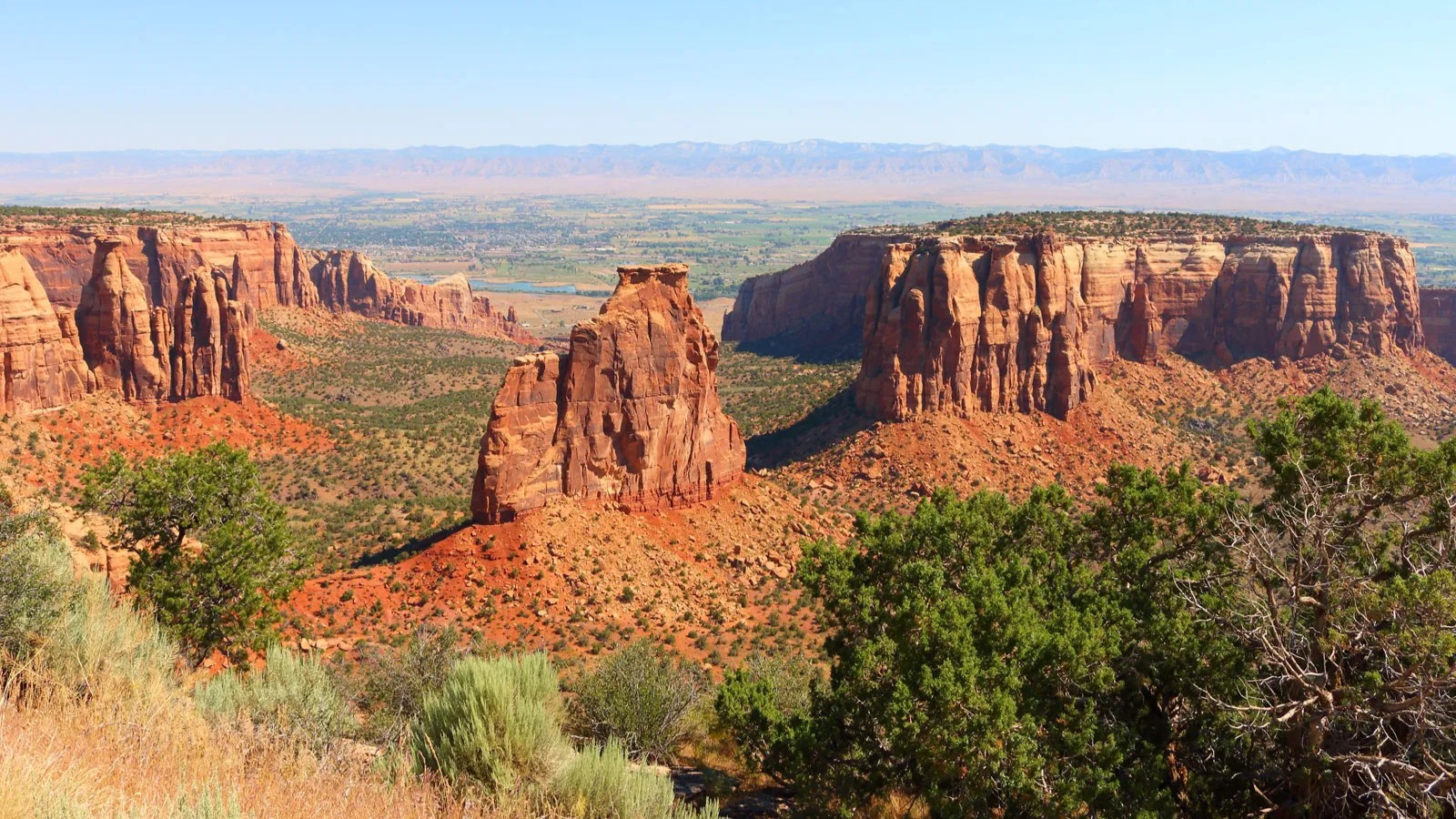
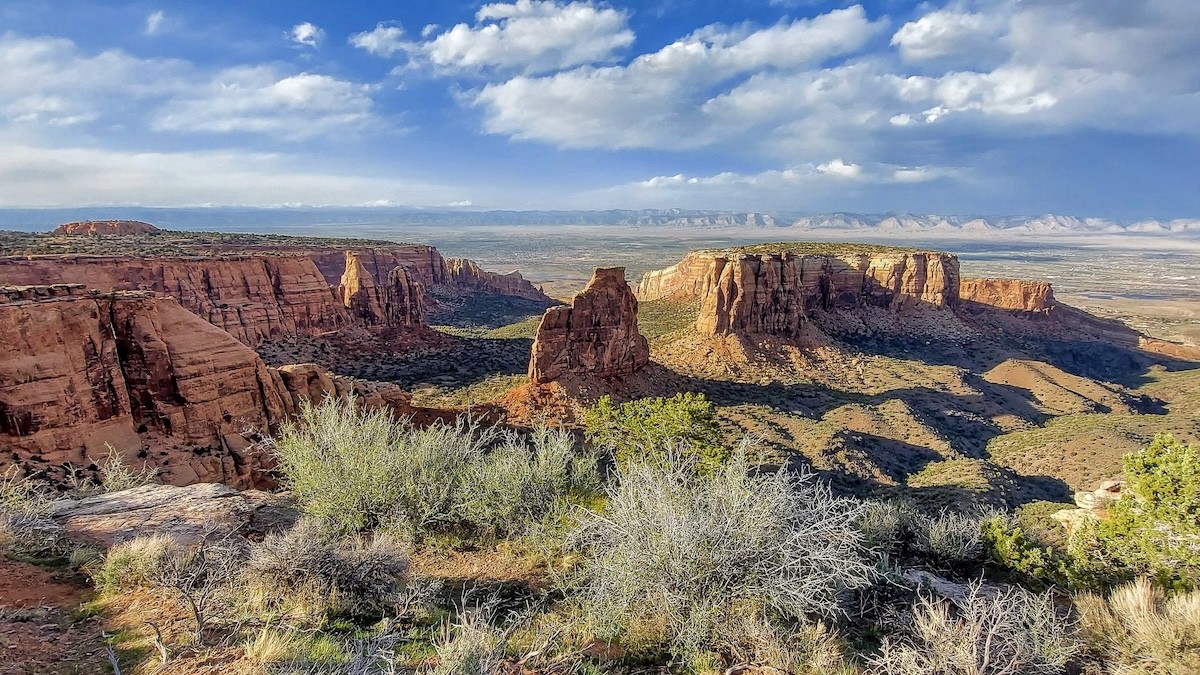
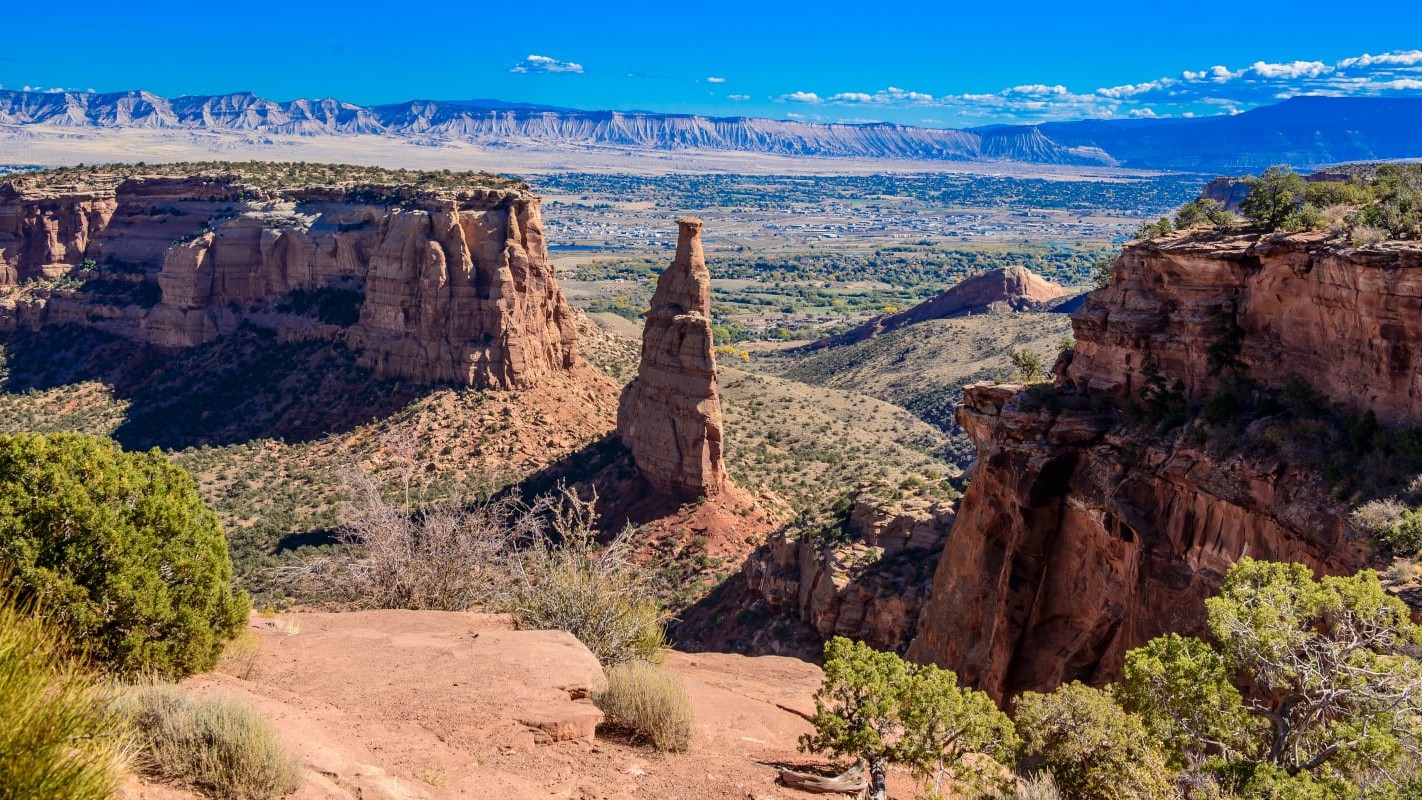
Colorado National Monument rises straight out of the Grand Valley floor west of Grand Junction — 20,533 acres of sheer red sandstone walls, freestanding monoliths and deep side canyons cut into the edge of the Uncompahgre Plateau. Rim Rock Drive is the reason most people come: the 23-mile road traces the canyon rim, climbs through three hand-cut tunnels, and strings together roughly nineteen overlooks where the drop-off is immediate and the view runs from Independence Monument out across orchards and vineyards to the Book Cliffs. Below the pavement, nearly 50 miles of trail range from short paved walks at Saddlehorn to long, waterless routes down into Monument and Ute canyons. Desert bighorn sheep work the ledges, collared lizards sun themselves on the slickrock, and golden eagles ride the thermals along the rim.
The monument owes its existence to John Otto, a trail-builder who arrived near Grand Junction in the early 1900s and set about cutting routes into canyons everyone else called impassable, working with a pick, a shovel and two burros. His petition campaign worked: President William Howard Taft signed the proclamation on May 24, 1911, and Otto became the first custodian at a dollar a month, living in a tent on the grounds for roughly sixteen years. The infrastructure visitors use today came a generation later, when Civilian Conservation Corps crews built Rim Rock Drive, the Saddlehorn headquarters area and the Devils Kitchen picnic shelter between 1933 and 1937. Both the road and the Saddlehorn complex are listed historic districts today, and the park recorded 483,436 visitors in 2025.
Photo Gallery
News & Events
Plan your route with the current Park Maps & Trail Guides for Colorado National Monument in Fruita, CO.
Frequently Asked Questions
What is there to do at Colorado National Monument?
- Drive Rim Rock Drive: The 23-mile historic scenic road follows the canyon rim past roughly nineteen overlooks and three CCC-era tunnels, where headlights are required.
- Hike the canyons: Nearly 50 miles of maintained trail run from short rim walks near Saddlehorn to long, strenuous backcountry routes into Monument and Ute canyons.
- Camp at Saddlehorn: The park’s developed campground stays open year-round and takes reservations through recreation.gov.
- Ride the climb: Road cyclists tackle Rim Rock Drive as one of the Western Slope’s best-known ascents.
- Watch wildlife: Desert bighorn sheep and collared lizards are regularly spotted along the rim, and kids can earn a Junior Ranger badge at the visitor center.
What is nearby Colorado National Monument?
- Fruita: The gateway town sits about four miles from the west entrance station and is a hub for mountain biking on the nearby singletrack.
- Grand Junction: The Western Slope’s largest city adjoins the monument’s east entrance and has the region’s lodging, dining and airport.
- Dinosaur Journey Museum: A Museums of Western Colorado paleontology museum in Fruita with real fossils and robotic dinosaurs.
- McInnis Canyons National Conservation Area: BLM canyon country immediately west, including the arches of Rattlesnake Canyon.
- Palisade wine country: Colorado’s main grape-growing region lies roughly 25 miles east along the Colorado River.
When was Colorado National Monument established?
Colorado National Monument was established on May 24, 1911, when President William Howard Taft signed a proclamation under the authority of the 1906 Antiquities Act. The push came from John Otto, a trail-builder who settled near Grand Junction in the early 1900s and cut the first routes into canyons locals considered impassable. Otto campaigned through petitions and the local press for federal protection, and in June 1911 he was appointed the monument’s first custodian at a salary of one dollar a month, a post he held for roughly sixteen years while living in a tent on the grounds.
The monument’s defining infrastructure arrived during the Great Depression. Between 1933 and 1937, Civilian Conservation Corps enrollees working to National Park Service designs built Rim Rock Drive, the Saddlehorn headquarters and utility area, and the Devils Kitchen picnic shelter. The Fruita-side section of Rim Rock Drive opened in 1937, and both the road and the Saddlehorn complex are now listed historic districts. Campaigns to redesignate the 20,533-acre monument as a national park have recurred since 1911 without success.
When is Colorado National Monument open?
The park itself is open 24 hours a day, seven days a week, year-round, though Rim Rock Drive can close temporarily for snow or rockslides. The Saddlehorn Visitor Center is open 9:00 a.m. to 4:00 p.m., extending to 5:00 p.m. during the peak spring and summer season, and closes on Thanksgiving Day, December 25 and January 1. Saddlehorn Campground is open year-round; loops A and C close for winter while loop B stays open. Call (970) 858-3800 or the road status line at (970) 858-3617 ext. 350 before heading up in bad weather.
Is Colorado National Monument family friendly?
There is no age restriction at Colorado National Monument, and children under 16 do not need an entrance pass. Entrance is $25 per private vehicle, $20 per motorcycle or $15 per person on foot or bicycle, each good for seven days; an annual monument pass is $45 and America the Beautiful passes are accepted. Families should note that pets are not allowed on any trail and must stay on paved areas, though they are welcome in the campground. Summer heat and long drops at unfenced overlooks make close supervision of small children important.